Restoring the striped bass


IN 1983, THE STRIPED BASS CATCH HAD CRASHED — FROM 14.7 TO 1.7 MILLION LBS

Striped bass — also known as rockfish or stripers — has been one of the most sought-after commercial and recreational fish in the Chesapeake Bay.

But, by the mid-1980s, the population had tumbled to the lowest numbers in decades. It was determined that a combination of overfishing, pollution, and changing water temperatures were the causes.

In 1985, Maryland imposed a total moratorium on striped bass. Virginia followed by banning striped bass fishing in spawning areas, and four years later, they also imposed a total ban on striped bass fishing.

During the years of the moratorium, fishery managers continued to monitor striped bass populations in Chesapeake Bay. In 1989, both Virginia and Maryland lifted their moratoriums on striped bass, and limited commercial and recreational fishing resumed.

TODAY, THE STRIPED BASS POPULATION IS AT ITS HIGHEST LEVEL IN DECADES
Line graph with striped bass landings in metric tons on the y-axis, and Year from 1950 to 2010 on the x-axis. A vertical red dotted line shows the 1985 moratorium on fishing striped bass. The moratorium was lifted in 1989. Both commercial and recreational striped bass landings increase following the ban.
When the striped bass moratorium went into effect, populations rebounded fairly quickly and dramatically. Source: Dr. Ed Houde, University of Maryland Center for Environmental Science.
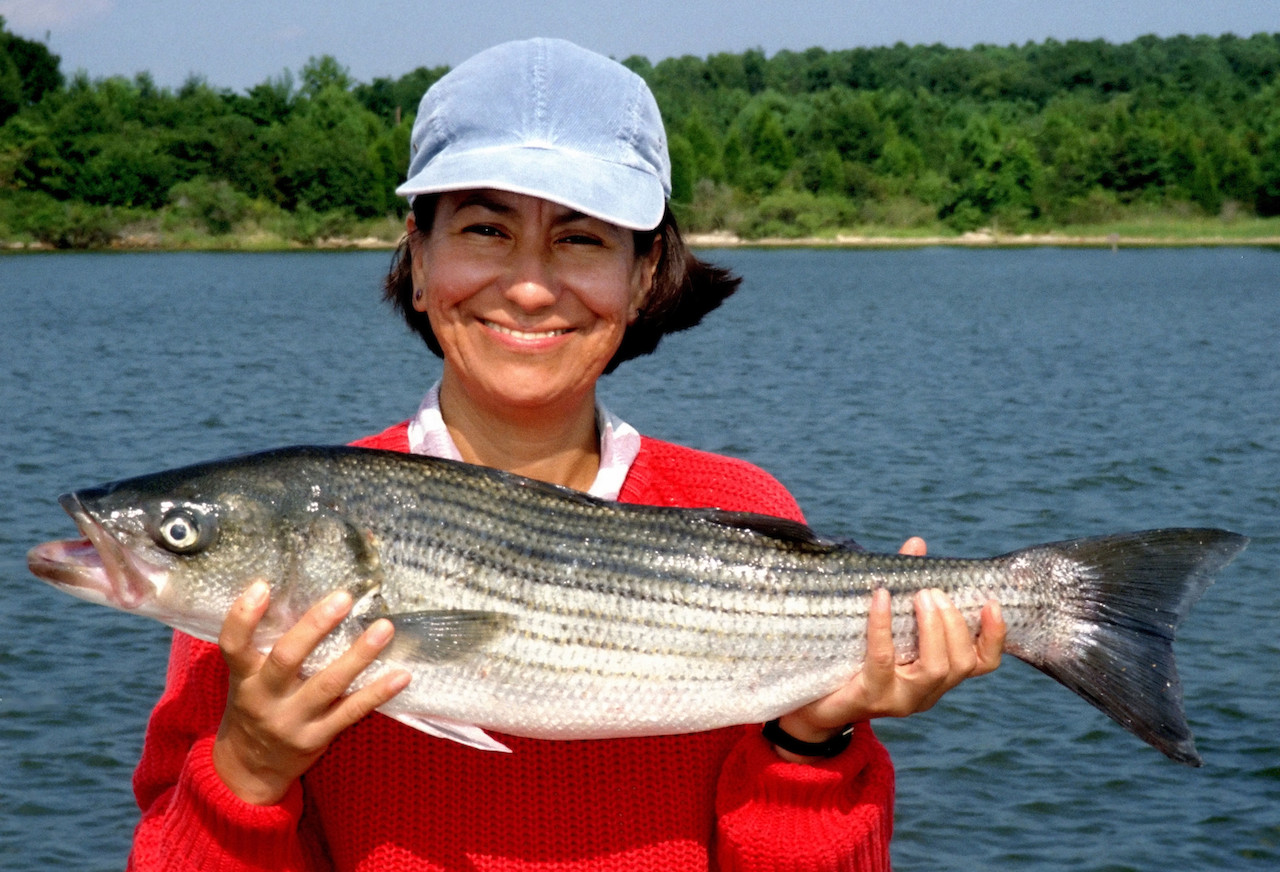
Photo of a smiling woman holding a large striped bass.
Striped bass have large tails and can maneuver well even in fast moving turbulent waters.


Regulating blue crab harvests


THE BLUE CRAB POPULATION has declined by over 50% since 2010

Blue crabs support commercial and recreational fisheries across the region, but poor water quality, seagrass habitat loss, harvest pressure, and natural predation can affect their continued health.

During the late 1990s and 2000s, blue crab populations in the Chesapeake Bay reached some of their lowest numbers. Harvest regulations were put in place for the 2008 season and the population rebounded temporarily, with female abundance in decline since 2010. No single factor has been attributed to this decline, but researchers believe predation and the low survival rates of young crabs play a role.

A line graph with “Millions of spawning female crabs” on the y-axis and Year from 1990 to 2006 on the x-axis. A horizontal line at 75 million spawning female crabs marks the threshold below which the population is unsustainable. A horizontal line just below 200 million spawning female crabs marks the population target above which is considered sustainable.
The numbers of spawning-age female blue crabs rebounded in 2010, but has been declining since, despite reaching its highest-ever abundance in 2017. These variable trends underline the need to continue water quality restoration efforts for the Chesapeake Bay. Source: Maryland Department of Natural Resources and Virginia Institute of Marine Science.
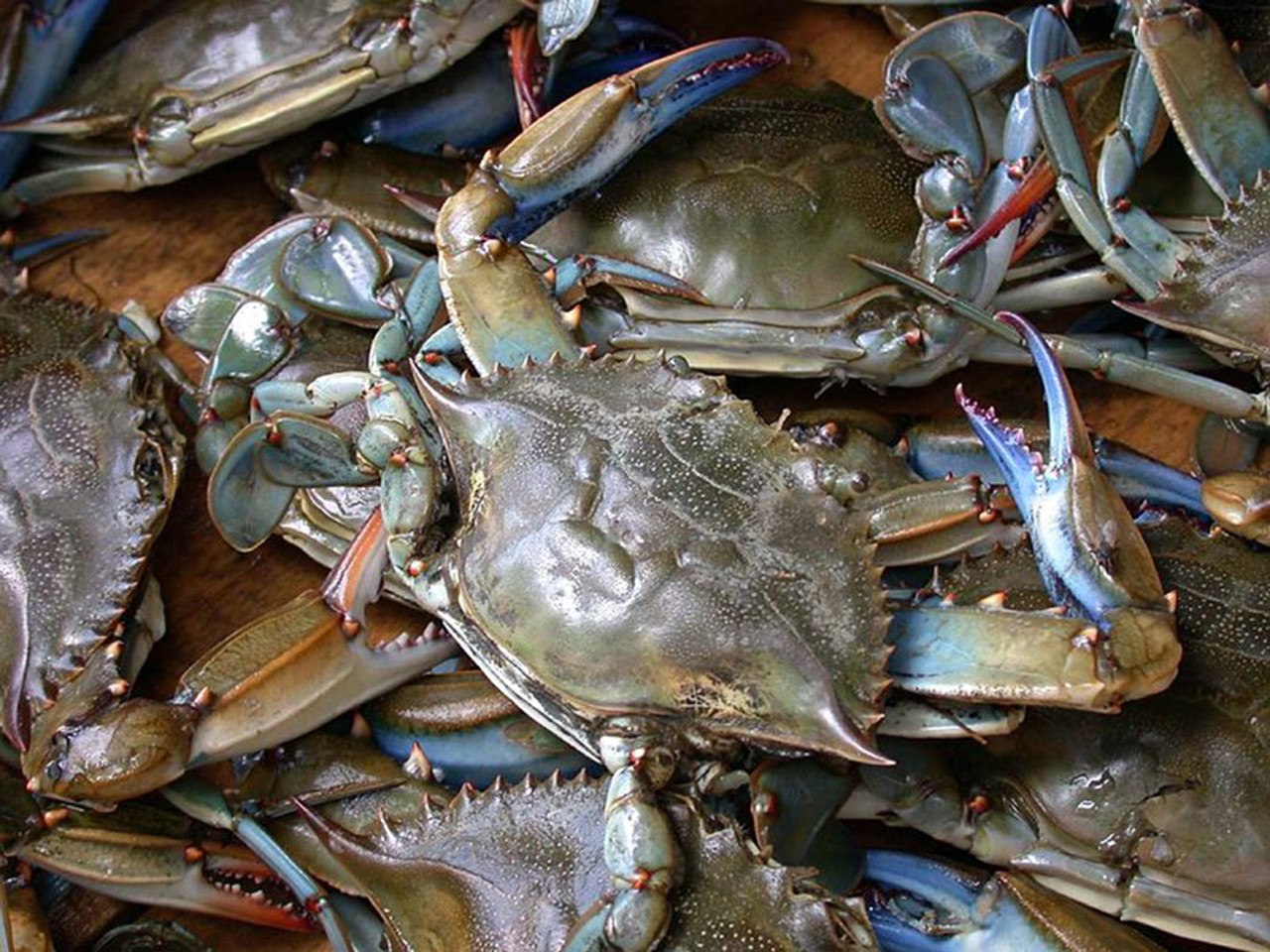
Close-up photo of a pile of blue crabs.
The blue crab is perhaps the most sought-after shellfish in the mid-Atlantic region, and is caught both commercially and recreationally.